
Applications
New bell-type annealing systems, replacement of an existing inner cover, and selected revamp work after the installed interfaces and operating history are reviewed.
Process-Enclosure Component for Bell Annealing Furnaces
A bell-furnace inner cover is a gas-tight fabricated enclosure fitted over the charge on the furnace base. It separates the controlled atmosphere surrounding the load from the heating-hood or cooling environment. The cover/base seal, shell, flange, lifting features and any fan or diffuser interfaces must be evaluated together against the stated design basis.
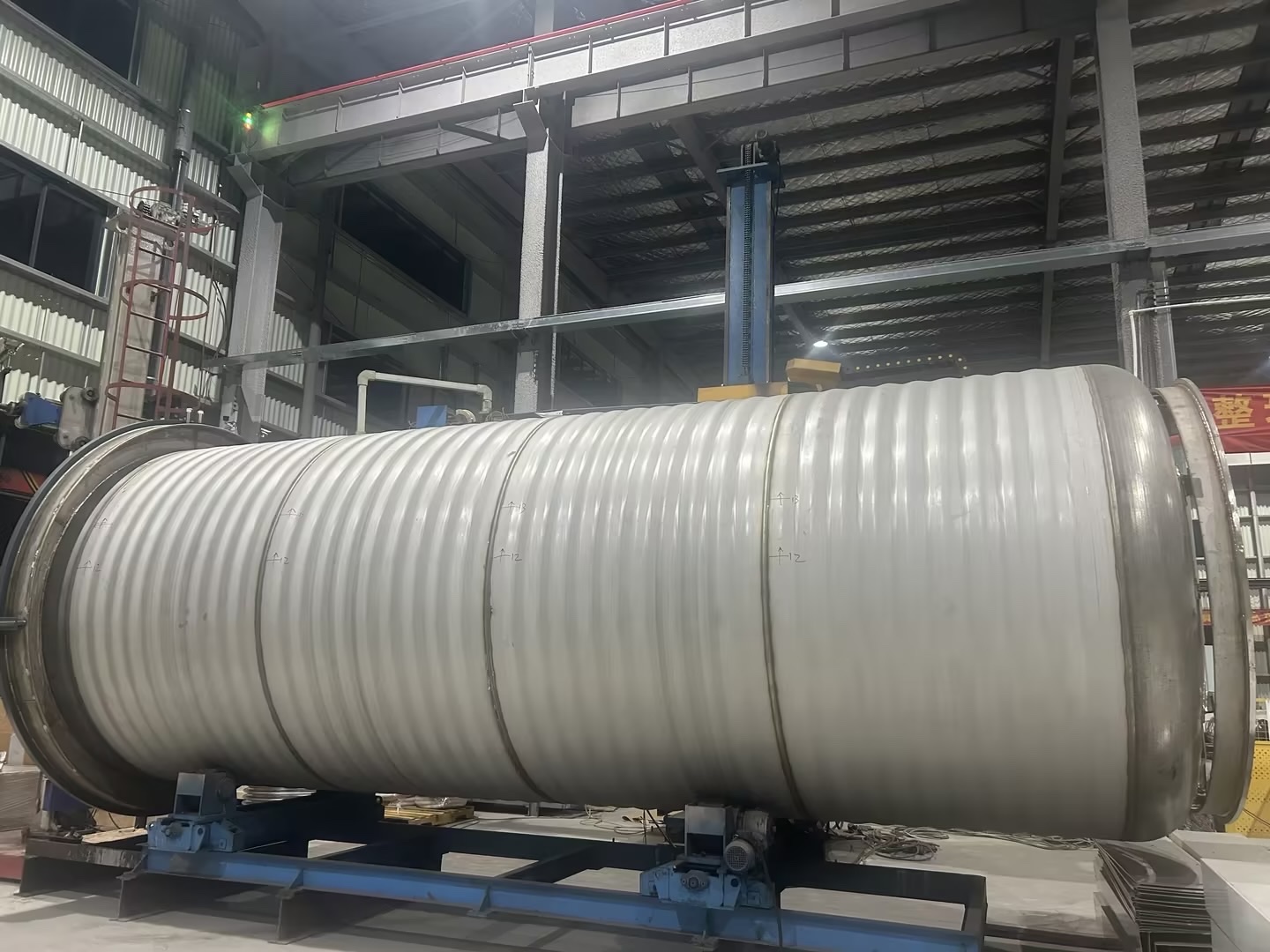
New bell-type annealing systems, replacement of an existing inner cover, and selected revamp work after the installed interfaces and operating history are reviewed.
Hengyuan accepts enquiries for new and replacement inner covers and can review manufacturability when sufficient drawings and operating data are provided. Final design responsibility, deviations from the customer drawing and acceptance criteria must be stated in the signed technical specification.
Provide the existing drawing or measured geometry, interfaces, material, service temperature and cycle, atmosphere, maximum differential pressure during normal operation, purge, evacuation (if used) and defined fault conditions, operating history, failure evidence, inspection requirements, quantity and destination.
A bell-furnace inner cover is a gas-tight fabricated enclosure fitted over the charge on the furnace base. It separates the controlled atmosphere surrounding the load from the heating-hood or cooling environment. The cover/base seal, shell, flange, lifting features and any fan or diffuser interfaces must be evaluated together against the stated design basis.
Some procurement documents use terms such as protective cover or retort. These terms are not universally equivalent, so the drawing, interfaces and service duty—not the label alone—govern the scope.
Heat-resistant stainless-steel grades such as Type 309S (UNS S30908) and Type 310S (UNS S31008) may be evaluated for some duties. The grade designation alone is not a complete material specification: the governing product standard, product form, thickness, heat treatment, certification and permitted substitutions must also be stated.
Selection must consider the actual cover-metal temperature, time at temperature, thermal gradients and cycling, creep and distortion, the different atmospheres at the inner and outer surfaces, weld design and filler selection, fabrication size, repair history and lifecycle requirements.
A material grade and nominal thickness alone are insufficient to confirm fitness for service. A final technical proposal requires the drawing, dimensions, cover-metal temperature cycle, differential-pressure cases, seal and weld configuration, inspection basis, target service life and applicable requirements.
The manufacturing plan can cover material identification, forming sequence, longitudinal and circumferential weld control, flange alignment, dimensional inspection and leak testing. The agreed records should match the customer's technical specification and acceptance points.
For a replacement component, Hengyuan reviews the existing interfaces and available operating evidence before confirming equivalence or proposing a change. Any proposed change to grade, thickness, weld layout or flange detail requires an engineering basis and customer approval.
PROJECT QUESTIONS
It forms the process enclosure around the load, retains the agreed protective atmosphere and transfers heat through its shell while connecting to the furnace base and seal.
No. Some plants use the terms for similar components, while others define different functions or interfaces. The drawing, dimensions and functional specification must identify what is required.
Compare the applicable material standard and verified product data together with temperature, time, atmosphere, cycling, geometry, weld design, fabrication route and the observed damage mechanism. Grade name alone is not a design decision.
Not as a direct substitution without engineering review.
No. Thickness must be assessed with diameter, height, weld layout, thermal movement, handling and pressure conditions, corrosion or oxidation allowance, fabrication tolerances and inspection criteria.
The signed technical specification should identify the required material identification, welding records, dimensional reports, NDT, leak-test records and inspection release documents. Any leak test should state the test medium, pressure, hold time, method and acceptance criterion.
Send drawings or measurements, clear photographs, interfaces, material specification, operating cycle, atmosphere and pressure conditions, service history, observed failure mode, documentation requirements, quantity and destination.